Heungdeok Dream Women's Clinic Doctor's Column
Obstetrics & Gynecology Column

Low AMH (Ovarian Reserve): Does It Mean Pregnancy Will Be Difficult?

What an AMH (ovarian reserve) result actually measures, what a low or high value means for the chance of pregnancy, and what to check after the test.

Published 2026-09-23 Updated 2026-09-23 Reviewed by Soojin Han, Medical Director · Obstetrics & Gynecology Specialist

The anti-Mullerian hormone (AMH) level measured in an ovarian reserve test is not a number that decides whether pregnancy is possible. It is an indicator of how many eggs remain in the ovaries right now. A result that puts your ovarian age at 35 when you are younger than that does not automatically mean infertility, and research has found that when egg quality is good and ovulation is regular, a low value does not make a large difference to the chance of natural pregnancy.

This article explains what the AMH level represents, what a low value and a high value each mean, and what to look at after the test. It is written for anyone who has had the test through a pre-pregnancy health screening programme and then found the result sheet hard to read.

01

What exactly does an AMH level measure?

Key point
The anti-Mullerian hormone level reflects the number of follicles left in the ovaries, in other words how many eggs are currently available. It is a measure of quantity, not of egg quality, and it is not by itself a test for infertility.

AMH reflects the number of follicles in the ovaries. It tells you about the number of eggs, not their quality. The follicle count naturally falls with age, and a high value does not by itself mean that pregnancy will be easy or that a low one means infertility.

Even when the number of eggs is small, the chance of natural pregnancy is affected less than people expect if egg quality is good and ovulation is regular. Judging the chance of pregnancy from this number alone goes beyond what the test was designed to show.

AMH is measured from a blood sample and read alongside age and the other findings.
02

Does a low value mean natural pregnancy is difficult?

Key point
In a study of women aged 30 to 44, the group with low AMH and the group with normal AMH showed no statistically significant difference in the rate of natural pregnancy within 6 to 12 weeks. A low value alone is therefore not a verdict on fertility.

In clinical research comparing women aged 30 to 44, those with a low AMH level and those with a normal level showed no statistically significant difference in the rate of natural pregnancy. This suggests that an ovarian reserve marker on its own has limited value as a test for infertility.

That does not mean the result can simply be set aside. The value can shift with your general condition and with the timing of the test, so the interpretation and the next steps should be decided together rather than from the figure alone.
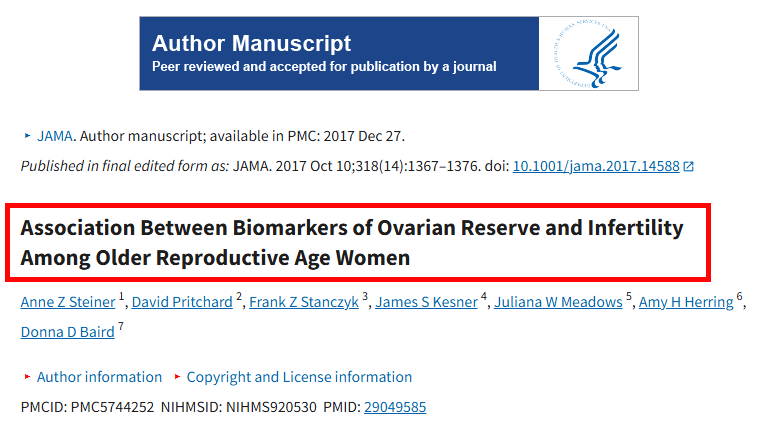
Research material related to Low AMH (Ovarian Reserve): Does It Mean Pregnancy Will Be Difficult?
Related research
03

If the value is high, does that mean there is nothing to worry about?

Key point
A high AMH value is not automatically a good sign. Ovarian function can still be reduced even when ovulation occurs, and conditions such as polycystic ovary syndrome can push the measured value above what would be expected for your age.

A high AMH level is not a reason for reassurance on its own. Even when ovulation takes place, reduced ovarian function can make implantation harder. In polycystic ovary syndrome, immature follicles can raise the measured value without reflecting better fertility.

A polycystic pattern is confirmed with ultrasound and hormone testing rather than from one number, so it is worth checking whether ovulation is occurring and what condition the follicles are in.

  • Whether ovulation occurs — ovulation can still occur, but diminished ovarian function may prevent the process from progressing to implantation in some cases
  • Polycystic ovary syndrome — a common reason for an AMH value higher than expected for your age
  • Follicle maturity — if follicles do not grow and release on time, a large number of eggs can remain without being usable
04

What should be checked after the test?

Key point
The number of eggs cannot be increased by any form of care. What can be done is to combine ultrasound, blood tests, the ovulation pattern and the condition of the uterus, and from that build a step-by-step plan for what is needed now.

A low AMH result does not lead straight to IVF. The physical picture is assessed first and a direction for treatment is set from there. Understanding the ovulation pattern and adjusting daily habits can support ovarian function, and assessing fertility factors in the patient's partner as well can improve the odds of natural pregnancy.

At the same time there may not be unlimited time. If a procedure is going to be needed, it helps to plan so the window is not missed, and the next step should be decided from several findings together rather than from a single test.

  • Antral follicle count — an ultrasound check of the early follicles that may grow into mature eggs
  • Cycle and ovulation — the basic indicator of whether ovulation is happening regularly
  • Uterine conditions and metabolic state — both can affect implantation and the course of a pregnancy, so they are reviewed together

Soojin Han, Medical Director
Doctor's view

How the doctor decides

Soojin Han, Medical Director · Obstetrics & Gynecology Specialist

I do not recommend IVF on the basis of the number alone

I do not tell a patient that IVF is needed simply because an AMH value is low. I first look at blood tests, ultrasound and the ovulation pattern together, and check whether natural pregnancy is a realistic situation before anything else.

I look at the antral follicle count and ovulation together

Rather than the converted ovarian age printed on the result sheet, I look first at the antral follicle count on ultrasound and at whether ovulation is actually taking place. I would rather match several findings against each other than decide from one figure.

A polycystic pattern is checked separately

When a value comes back higher than expected for a patient's age, I do not tell them it is fine. I check for polycystic ovary syndrome as well, because the direction of care can only be set properly once the cause is clear.

When timing matters, I set the plan out in stages

I first make clear whether this is a situation where we can wait for natural pregnancy, or one where the timing should not be missed. That way we avoid hurrying without reason, while also not letting the right moment pass.

Summary

In summary

The AMH level measured in an ovarian reserve test is not an absolute standard for whether pregnancy is possible. It is an indicator of how many eggs remain. A low result is not a reason for alarm, but it is also not a reason to let time pass without doing anything. Combining ultrasound, blood tests and the ovulation pattern to work out what care is needed now comes first, and the converted ovarian age on the result sheet should be interpreted properly rather than used for self-diagnosis. If the result is worrying or the direction of care is unclear, it is worth having your current condition assessed in person.

FAQ

Frequently asked questions

QDoes a low ovarian reserve result always mean infertility?
A

A low AMH level means that fewer eggs remain. It is a separate matter from egg quality and from whether ovulation occurs. In a study of women aged 30 to 44, there was no statistically significant difference in the rate of natural pregnancy within 6 to 12 weeks between the low AMH group and the normal group.

QWhy does the ovarian age on my result differ from my actual age?
A

The figure is a conversion of your AMH level compared with the average for each age group, so it can differ from your actual age, and it can also shift with your condition on the day and the timing of the test. Reviewing several results together is more accurate than judging your health from one number.

QIs there any way to increase the number of eggs?
A

The number of eggs itself cannot be increased through any form of care. Analysing blood tests, ultrasound and the ovulation pattern and adjusting daily habits can, however, help support ovarian function.

QIf my AMH is high, can I assume everything is fine?
A

A high value is not necessarily a good sign, and polycystic ovary syndrome can produce a value higher than expected for your age. Whether ovulation is occurring and how ovarian function looks need to be checked alongside it.

Soojin Han, Medical Director
Medical review
Soojin Han, Medical Director · Obstetrics & Gynecology Specialist
This content is general medical information and may not apply to every individual. Diagnosis and treatment are decided through a consultation.