Heungdeok Dream Women's Clinic Doctor's Column
Obstetrics & Gynecology Column

Fetal Sex DNA Test vs NIPT: What Is the Difference?

The difference between the fetal sex DNA test and NIPT, what each test checks and when each is appropriately done.

Published 2026-11-02 Updated 2026-11-02 Reviewed by Soojin Han, Medical Director · Obstetrics & Gynecology Specialist

The fetal sex DNA test and NIPT are often mentioned together as ways to find out a baby's sex during pregnancy, but the two tests differ in purpose and scope. The fetal sex DNA test analyses fetal DNA for the presence or absence of the Y chromosome and confirms sex only, while NIPT is a health screening test that looks at chromosomal abnormalities as well as sex.

The fetal sex DNA test can be carried out from 6 weeks of pregnancy onward and its accuracy is about 99%, while NIPT is carried out at around 10 weeks of pregnancy to check for abnormalities such as Down syndrome. It is important to know that both are screening tests, not diagnostic tests.

01

What does the fetal sex DNA test check?

Key point
The fetal sex DNA test analyses fetal DNA in the mother's blood for the presence or absence of the Y chromosome in order to confirm the baby's sex. It can be carried out from 6 weeks of pregnancy onward, and its accuracy is reported to be about 99%.

For a long time, fetal sex was confirmed by reading an ultrasound scan at around 14 weeks of pregnancy, but depending on the baby's position the reading could be unclear or the sex could turn out to be the opposite. Amniocentesis, in which a needle is inserted into the uterus, is fairly accurate, but it is invasive and a considerable burden. The fetal sex DNA test was introduced to make up for these limits by confirming sex with a simple blood draw.

DNA from the fetus circulates in the mother's blood, and the test works by analysing whether the Y chromosome is present in it. If the Y chromosome is detected the baby is judged to be a boy, and if it is not detected, a girl. However, when the test is done very early in pregnancy or in a multiple pregnancy, it is difficult to tell the sex of each baby apart, so the accuracy is not complete.

  • Timing of the test — very early in pregnancy the amount of fetal DNA may not be sufficient, so accuracy can be lower
  • Multiple pregnancy — with twins, the presence or absence of the chromosome can be confirmed, but it is difficult to tell the sex of each baby
  • How the result is read — if the Y chromosome is detected the baby is judged to be a boy, and if not, a girl
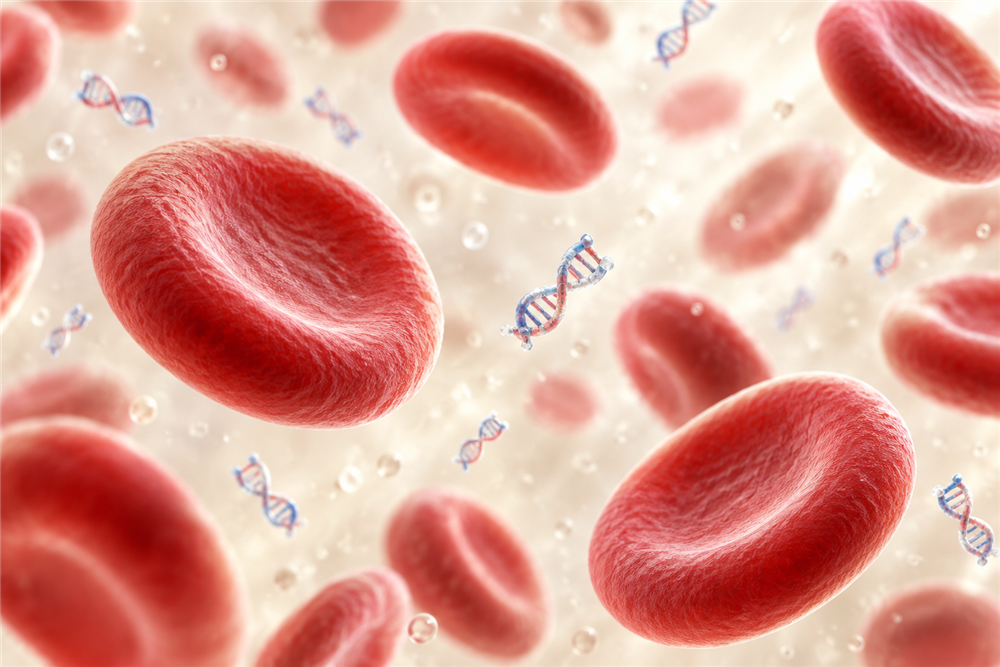
Anatomy illustration related to Fetal Sex DNA Test vs NIPT: What Is the Difference?
02

How is NIPT different from the fetal sex DNA test?

Key point
NIPT goes beyond confirming sex. It is a health screening test that also checks for chromosomal abnormalities such as Down syndrome and Edwards syndrome. It is carried out from around 10 weeks of pregnancy, and the result should be read as a level of risk rather than a diagnosis.

NIPT and the fetal sex DNA test both use the mother's blood, but the range of what they check is clearly different. NIPT is regarded as a method with high sensitivity and specificity, and it checks broadly for chromosomal abnormalities in the fetus as well as sex, which helps medical care to begin quickly when it is needed.

A high-risk result on NIPT does not mean that an abnormality is confirmed straight away, and the result should be taken as an indicator of risk. When a high-risk finding is seen, the usual procedure is to confirm it again with a further test such as chorionic villus sampling or amniocentesis, and then decide how to proceed.

  • Purpose — it checks for chromosomal abnormalities such as Down syndrome and Edwards syndrome together with sex
  • Timing — it can be carried out from around 10 weeks of pregnancy
  • Reading the result — a high-risk result means a level of risk, not a diagnosis, and is confirmed again with a further test

Anatomy illustration related to Fetal Sex DNA Test vs NIPT: What Is the Difference?
03

Which of the two tests should you choose?

Key point
To confirm sex alone, the usual choice is the fetal sex DNA test after 6 weeks of pregnancy. To check for chromosomal abnormalities as well, the choice is NIPT at around 10 weeks of pregnancy. In either case, the mother's overall health also needs to be looked after.

It is most accurate to understand the two tests not as substitutes for each other but as separate tests with different purposes. For a woman who simply wants to know the sex early, the fetal sex DNA test after 6 weeks of pregnancy is suitable. For a woman who also wants to check for chromosomal abnormalities or the level of health risk, NIPT at around 10 weeks of pregnancy is the more suitable option.

When choosing, it should be kept in mind that both are screening tests rather than diagnostic tests, and the result needs to be interpreted together with the course of the pregnancy rather than trusted blindly. Beyond sex and chromosome testing, an ultrasound assessment of the baby's growth and checks on the mother's health, such as for pre-eclampsia or gestational diabetes, should also be carried out in each trimester.

Soojin Han, Medical Director
Doctor's view

How the doctor decides

Soojin Han, Medical Director · Obstetrics & Gynecology Specialist

I do not stop at confirming the sex

Even when a patient has confirmed the sex with the fetal sex DNA test or NIPT, I do not consider the care finished at that point. I believe the baby's growth and the changes in the mother's health need to be followed after the test as well, so I explain the plan for the next visit and the items that still need to be checked.

I do not present the accuracy as certain

The accuracy of the fetal sex DNA test is high at about 99%, but I tell patients in advance about situations where it can be lower, such as testing very early in pregnancy or a multiple pregnancy. Rather than placing too much trust in the result, my principle is to guide each patient to a test timing that fits her week of pregnancy and her situation.

I explain NIPT results as a level of risk

When NIPT shows a high-risk finding, I do not describe it as a confirmed abnormality. I explain clearly that the result shows a level of risk and, where needed, I go through the further confirmation steps such as chorionic villus sampling or amniocentesis, and how we would proceed after that.

I look at the mother's overall health as well

I do not look only at sex or chromosome testing. I also check the baby's growth by ultrasound and the changes in the mother's health, such as pre-eclampsia and gestational diabetes, in each trimester. I take enough time during the visit to answer questions, and my principle is to decide the next step together with the patient.

Summary

In summary

The fetal sex DNA test and NIPT both use the mother's blood, but they are separate tests with different purposes and different appropriate timing. To confirm sex alone, the usual choice is the fetal sex DNA test after 6 weeks of pregnancy, and to check for chromosomal abnormalities as well, NIPT at around 10 weeks of pregnancy. Because both are screening tests rather than diagnostic tests, the result should be taken as a level of risk and, where needed, confirmed again with a further test. If you have questions about the timing of a test or how to read a result, it is worth discussing them with a doctor before deciding on the next step.

FAQ

Frequently asked questions

QCan the fetal sex DNA test and NIPT be done on the same day?
A

The appropriate timing differs: the fetal sex DNA test is done after 6 weeks of pregnancy and NIPT at around 10 weeks of pregnancy. They are usually done at separate times according to the purpose and the week of pregnancy.

QCan the fetal sex DNA test result differ from the baby's actual sex?
A

The accuracy is high at about 99%, but the result is not treated as certain. Accuracy can be lower when the test is done very early in pregnancy or in a multiple pregnancy.

QDoes a high-risk NIPT result mean there is definitely an abnormality?
A

A high-risk result is a figure that indicates a level of risk, not a diagnosis. It is confirmed again with a further test such as chorionic villus sampling or amniocentesis before deciding how to proceed.

QAre there other tests that should not be missed during pregnancy?
A

An ultrasound assessment of the baby's growth and checks for pre-eclampsia, gestational diabetes and anaemia should also be carried out in each trimester.

Soojin Han, Medical Director
Medical review
Soojin Han, Medical Director · Obstetrics & Gynecology Specialist
This content is general medical information and may not apply to every individual. Diagnosis and treatment are decided through a consultation.