Heungdeok Dream Women's Clinic Doctor's Column
Obstetrics & Gynecology Column

Reactive Cell Change on a Cervical Screening Result: What Does It Mean?

What 'reactive cell change' on a cervical cancer screening result means, how HPV testing fits in, and how each CIN stage is managed.

Published 2026-11-04 Updated 2026-11-04 Reviewed by Soojin Han, Medical Director · Obstetrics & Gynecology Specialist

In the national cervical cancer screening programme, eligibility is split by even and odd birth years, and in 2026 it is the turn of women aged 20 and over who were born in an even-numbered year.

The phrase 'negative, reactive cell change' on a result sheet can be alarming, but it does not mean cancer cells. It means the cervix has reacted to irritation or inflammation and its cells have changed shape slightly. This article explains what that means, how it relates to HPV, how CIN progresses through its stages, and what to look for when choosing where to be seen.

01

What exactly does a reactive cell change mean?

Key point
A reactive cell change does not mean cancer cells. It describes a state in which cervical cells have changed shape slightly in response to irritation or inflammation. It is similar to the process of a wound healing, so there is no need to suspect cancer straight away.

Cervical cells can change shape slightly as they try to protect themselves from irritation or inflammation, much like getting a mouth ulcer when you are tired. If there are no symptoms, it is fine to check again at the next routine screening.

When increased discharge, odour or itching come with it, the cause in most cases is vaginitis, so a test for the organism is needed, followed by treatment of the inflammation. Screening only checks for cell abnormalities, so symptoms call for separate tests and treatment.

  • No symptoms — if there are no particular symptoms, checking again at the next routine screening is enough
  • Discharge or odour — if discharge increases and there is an odour, mild vaginitis should be suspected and a test for the organism carried out
  • Itching — when itching appears as well, it is in many cases managed with treatment of the inflammation after a test for the organism
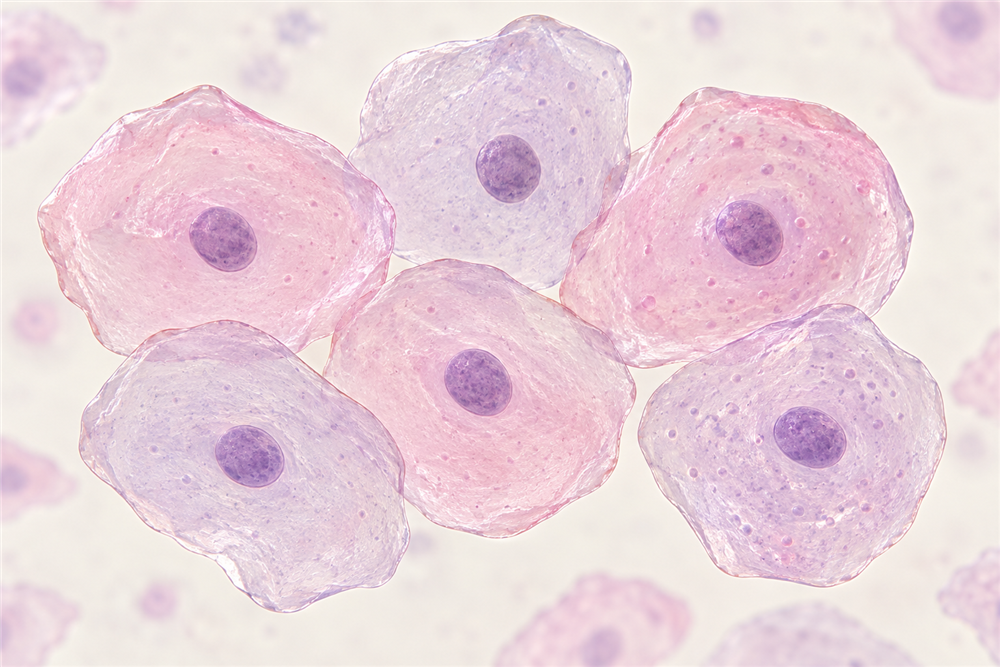
Anatomy illustration related to Reactive Cell Change on a Cervical Screening Result: What Does It Mean?
02

How is it related to HPV infection?

Key point
The human papillomavirus (HPV) can sometimes cause changes in cervical cells, but the cell test used in screening cannot, on its own, confirm whether an HPV infection is present. If the change has still not gone away on a repeat test, a separate HPV test is carried out.

The cell test used in screening only shows abnormal changes and cannot detect HPV infection itself, so if the cell change has not gone away on a repeat test, a separate HPV test is in many cases carried out. If high-risk HPV is found, that in itself needs management and treatment.

HPV infection does not mean cervical cancer, but the risk should be understood early and dealt with. A reactive cell change left without follow-up can progress to atypical squamous cells, so checking at this point shapes what happens next.

03

What stages do cell changes go through as they progress?

Key point
Atypical cells are divided into stages from CIN1 to CIN3. CIN1 is low grade and may resolve naturally, so follow-up tests at intervals of 6 months to 1 year are needed. CIN2 and above is the stage at which active treatment is recommended.

CIN1, a low-grade dysplasia, has a high chance of resolving naturally, so it is followed at intervals of 6 months to 1 year to watch for change. CIN2 and CIN3 are high-grade dysplasia, and because progression leads to stage 0 cancer (carcinoma in situ), treatment is recommended in advance.

From CIN2 upward, a cone excision called LEEP is carried out in many cases. In practice it is closer to a procedure in which the altered area is cut away slightly in a cone shape and removed. Understanding the stage on the result sheet makes it possible to judge whether follow-up is needed or whether it is time for treatment.

  • CIN1 — low-grade dysplasia that may resolve naturally, so follow-up tests are carried out at intervals of 6 months to 1 year
  • CIN2 and CIN3 — classified as high-grade dysplasia, the stage at which active treatment is recommended
  • Stage 0 cancer (carcinoma in situ) — the stage diagnosed when changes progress beyond the CIN stages; treatment is needed
  • LEEP (cone excision) — a procedure in which the altered area is cut away slightly in a cone shape and removed

Anatomy illustration related to Reactive Cell Change on a Cervical Screening Result: What Does It Mean?
04

Where should care continue after screening?

Key point
The tests needed and the way to respond differ from a reactive cell change through to the CIN stages, so specific guidance matters more than a simple 'it is negative'. Being screened where tailored treatment and aftercare are available helps to prevent recurrence.

Because the tests needed and the way to respond differ by stage, getting specific guidance on the current situation and on the timing of follow-up and repeat tests matters more than simply hearing 'it is negative'. That is what allows a person to manage the condition properly without missing the right time for treatment.

Vaginitis needs medication prescribed to match its cause, and if HPV persists or the result is CIN2 or above, management after treatment such as cone excision is needed to prevent recurrence and protect fertility. Missing changes from stage to stage can sometimes end in a cancer diagnosis.

  • Specific explanation — patients should be told specifically what stage the current cell change is at
  • Repeat test timing — if follow-up is needed, the interval for repeat tests should be clear
  • Tailored treatment — vaginitis calls for medication that matches its cause, and HPV-related stages call for treatment that matches the stage
  • Aftercare — care needs to continue after treatment to prevent recurrence and protect fertility

Soojin Han, Medical Director
Doctor's view

How the doctor decides

Soojin Han, Medical Director · Obstetrics & Gynecology Specialist

I do not stop at one line on the result sheet

I do not just pass on the result 'reactive cell change'. I also explain why it came out that way and what should be checked next. I believe a result has to be understood so that the right time for treatment is not missed.

Even without symptoms, I make the repeat test timing clear

If there are no symptoms I do not recommend treatment straight away, but I always tell the patient when the next repeat test should be. Low-grade changes such as CIN1 may resolve naturally, so follow-up at intervals of 6 months to 1 year is enough in many cases.

I do not recommend an HPV test without reason

I recommend a test for HPV infection only when the change continues on a repeat test, and I do not recommend unnecessary tests first. If infection is confirmed, however, I explain the risk clearly and we decide the next step together.

If treatment is needed, I explain the reason first

If the change has progressed to CIN2 or above and treatment such as cone excision is needed, I first explain why it is needed at this point, then continue care with aftercare and repeat test timing in place, aiming to prevent recurrence.

Summary

In summary

A reactive cell change does not mean cancer; it is closer to a state in which the cervix has changed shape slightly in response to irritation or inflammation. Whether it may lead to HPV infection or a CIN stage has to be checked with a repeat test, so the timing should not be missed. If there are symptoms, or if the change continues on a repeat test, it is wise not to delay and to have it checked at a clinic.

FAQ

Frequently asked questions

QIs a reactive cell change an early stage of cervical cancer?
A

No. It does not mean cancer cells are present; it describes a state in which cell shape has changed slightly in response to external irritation or inflammation. If there are no symptoms, it can be checked again at the next routine screening.

QCan a cell test alone show whether I have an HPV infection?
A

A cell test only shows abnormal changes and cannot confirm HPV infection itself. If the change continues on a repeat test, a separate HPV test is carried out.

QDoes a CIN1 diagnosis need treatment straight away?
A

CIN1 is low grade and may resolve naturally, so in many cases it is managed with follow-up tests at intervals of 6 months to 1 year. From CIN2 upward, treatment is recommended.

QIs LEEP (cone excision) major surgery?
A

It is a procedure in which the altered area is cut away slightly in a cone shape and removed, and it is recommended at high-grade stages of CIN2 and above. Aftercare and repeat tests need to go together with it to prevent recurrence.

Soojin Han, Medical Director
Medical review
Soojin Han, Medical Director · Obstetrics & Gynecology Specialist
This content is general medical information and may not apply to every individual. Diagnosis and treatment are decided through a consultation.