There are two ways to check for pregnancy: a home test done by yourself and a blood test taken at a clinic. To give the conclusion first, the most reasonable order is to check with a home test first once the expected period date has passed, and to have a blood test if quick confirmation or confirmation at an early stage is needed.
The two tests look at the same pregnancy hormone, but they differ clearly in the threshold at which they react and in when they can confirm pregnancy. This article looks at the features and accuracy of the home test and the blood test, and at the order in which to use the two tests one after the other.
When and how should a home pregnancy test be used to get an accurate result?
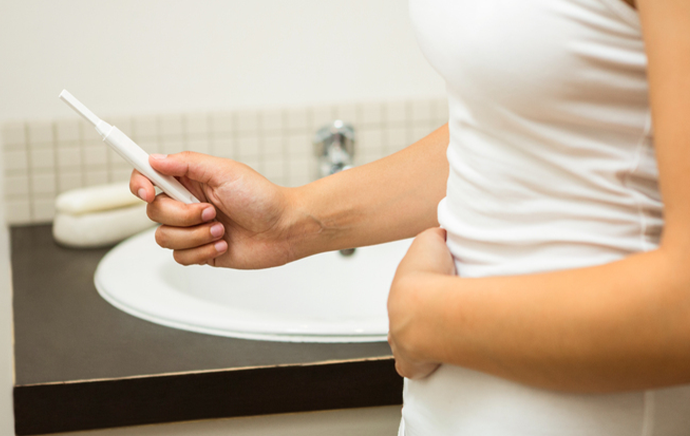
Whether a home test shows two lines depends on whether the concentration of pregnancy hormone in the urine exceeds a certain level. This concentration rises to a detectable level only after 10 to 14 days have passed since fertilisation, so a test done before then may show no reaction even when there is in fact a pregnancy.
The time of day at which the urine is collected affects the result as much as the timing of the test. Using the first urine of the morning, when the hormone concentration is highest, allows even a low concentration to be picked up without being missed, and at the very earliest stage the line may appear faint or an error may occur in which the result is hard to read.
- When to use — use it once 10 to 14 days have passed since fertilisation and the hormone concentration in the urine has reached a detectable level
- When to collect — using the first urine of the morning, when the hormone concentration is highest, raises accuracy
- Limitation — at the very earliest stage of pregnancy the hormone concentration is low, so two faint lines or a reading error can appear
How is a blood test different from a home pregnancy test?
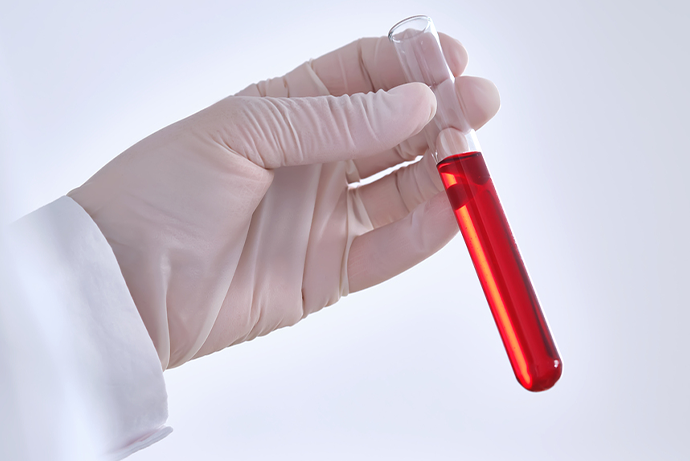
A blood test differs fundamentally from a urine test in that it reads the level of pregnancy hormone in the blood as a specific number. Because it picks up even very low concentrations, it can accurately confirm pregnancy from as early as about 10 days after fertilisation.
Checking the value gives information that goes beyond simply whether there is a pregnancy. Looking at how the value changes over time makes it possible to estimate whether the pregnancy is progressing within the normal range and roughly how many weeks along it is, so the test is used widely, from early pregnancy to distinguishing an ectopic pregnancy, and the result is confirmed in about 15 minutes.
- When it can confirm — pregnancy can be confirmed from about 10 days after fertilisation, earlier than with a urine test
- Amount of information — the hormone value is identified specifically, so even the stage of pregnancy can be judged in detail
- Accuracy — it detects even very low concentrations of the hormone, so reliability is very high
- Getting the result — the result can be confirmed about 15 minutes after the test
In what order should a home pregnancy test and a blood test be taken?
The order of testing depends on the situation. For someone with no particular plan who simply wants to know whether she is pregnant, checking with a home test first after the expected period date has passed is the least burdensome. If the result is positive, the natural next step is to have it confirmed with a blood test at a clinic.
On the other hand, someone who is planning a pregnancy or knows her ovulation date precisely can confirm it sooner with a blood test, even before the expected date. Because confirmation is possible from 10 days after fertilisation, earlier than with a urine test, choosing a blood test from the start is the reasonable option for those who want to know the result quickly.
- Step 1 — once the expected period date has passed, check for pregnancy with a home test first
- Step 2 — if the home test is positive, visit a clinic and have it confirmed with a blood test
- Step 3 — if you are planning a pregnancy or know your ovulation date precisely, a blood test can confirm it sooner, even before the expected date